Planning a Niagara Falls Trip from Toronto: A Step-by-Step Guide
Decide When to Go
The timing of your visit shapes everything from crowd levels to the view itself. Summer weekends draw heavy traffic and long queues at popular spots. Spring and fall offer milder weather and smaller crowds, though some attractions run on reduced hours. Winter transforms the falls into a dramatic frozen landscape, but outdoor walkways can be slippery and some boat tours stop operating. Midweek visits almost always mean fewer people and easier access to parking and viewpoints. Check local holiday calendars before booking; long weekends see a surge in visitors from across the region.
Choose Your Mode of Transport
Getting from Toronto to Niagara Falls gives you several options, each with its own trade-offs. Driving via the Gardiner Expressway and the Queen Elizabeth Way is the most direct route, taking about 90 minutes in good traffic. The QEW can slow down considerably near the Lewiston-Queenston Bridge, especially on summer weekends. Consider leaving early, before 8 a.m., to avoid the worst of it. Parking near the falls costs a flat daily rate at municipal lots; some hotels offer discounted parking for visitors who eat or stay on site.
GO Transit operates seasonal bus and train services from Union Station to Niagara Falls. The GO bus is a budget-friendly choice and drops you near the falls. Via Rail runs trains from Toronto to Niagara Falls station, which is a short taxi or bus ride from the tourist area. Both options let you skip the stress of driving and parking. If you prefer a more structured day, several coach companies run direct Niagara Falls day trip packages that include transport and entry to key attractions. One local option is Niagara Falls Canada Tours, which offers guided excursions from Toronto.

Plan Your Route and Stops
A straight drive to the falls is straightforward, but the journey offers worthwhile detours. The Niagara Parkway, which runs parallel to the Niagara River, passes through the Niagara Glen nature reserve and the historic village of Queenston. The Lewiston-Queenston Bridge provides a scenic crossing into the U.S., but you do not need a passport to stay on the Canadian side. If you have extra time, consider a stop at Coventry Grove for a short walk along the riverbank before reaching the main falls area. The route is well signposted, but a GPS or a paper map helps, especially if you plan to explore side roads.
Decide Which Side of the Falls to Explore
Most visitors head straight to the Canadian side, which offers the best panoramic views of the Horseshoe Falls. The main viewing area, Queen Victoria Park, runs along the edge of the gorge and is free to enter. The American side gives you a closer look at the Bridal Veil and American Falls, but the view of the Horseshoe Falls is less dramatic. If you want to see both sides in one trip, you can cross the Rainbow Bridge on foot, but you will need a passport. For a single-day trip from Toronto, sticking to the Canadian side is the most practical choice.
Book Your Attractions in Advance
Several experiences at the falls require timed entry, especially during peak season. The Journey Behind the Falls, which takes you through tunnels to the base of the Horseshoe Falls, often sells out hours ahead. The Hornblower boat cruise, which runs from the Canadian side, is another popular option that benefits from advance booking. The Niagara Parks Commission website lists all official attractions and lets you purchase tickets online. For a complete overview of available tours and packages, the Niagara Falls Canada Tours official site provides detailed itineraries and booking information. Booking a few days ahead can save you from waiting in line and guarantee your spot on the day you want.
Pack for the Conditions
The mist from the falls can soak clothing even on a dry day. A lightweight rain jacket or a poncho is useful, especially if you plan to go near the edge or take a boat cruise. Comfortable walking shoes are essential, as the main viewing areas, steps, and walkways add up to several kilometres of walking. In summer, sunscreen and a hat help against the sun reflecting off the water and pavement. In winter, warm layers and waterproof boots make the outdoor experience more enjoyable. A small backpack for water, snacks, and a camera keeps your hands free for railings and maps.
Manage Your Day's Timeline
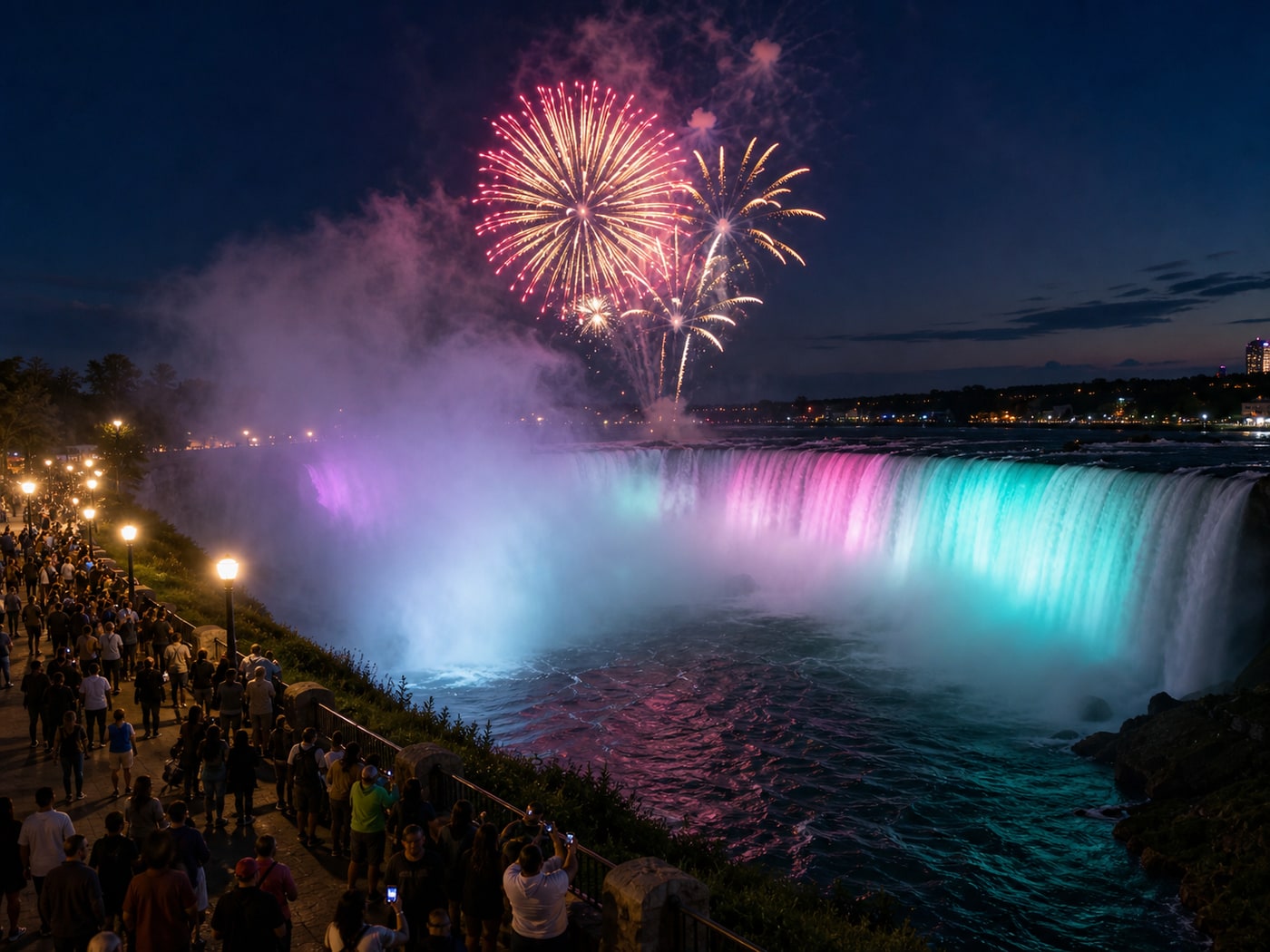
A day trip from Toronto works best with a clear schedule. Aim to arrive by 10 a.m. to secure parking and avoid the midday rush. Spend the morning exploring the main falls viewpoints and the Journey Behind the Falls. Have lunch at one of the restaurants near the falls or bring a packed meal to eat in the park. The afternoon can include the Hornblower cruise or a walk through the Clifton Hill entertainment district. If you want to see the falls lit up at night, plan to stay until after sunset, which in summer can be as late as 9 p.m. That means a late return to Toronto, so factor in driving time or check the last GO Transit departure.

Consider a Two-Day Trip
If your schedule allows, a two-day visit takes the pressure off and lets you see more. You can spend the first day on the main falls attractions and the second day exploring the Niagara Glen, the Butterfly Conservatory, or the historic town of Niagara-on-the-Lake. Overnight accommodation in Niagara Falls ranges from budget motels to full-service hotels with views of the falls. Booking a hotel with a falls-view room can be expensive, but even a standard room a few blocks away keeps the cost down. A two-day trip also makes it easier to visit the falls at quieter times, such as early morning or late evening.
Watch Out for Common Pitfalls
Several mistakes can derail a smooth trip. Not checking road conditions on the QEW before leaving can lead to unexpected delays. Forgetting to bring cash for parking or tolls, though many lots now accept cards, can cause inconvenience. Assuming you can walk across the Rainbow Bridge without a passport is a common error; border rules require proper identification even for pedestrians. Overpacking the day with too many attractions can leave you rushed and tired. Prioritise two or three experiences and leave room for spontaneous stops. Finally, ignoring the weather forecast may mean getting caught in a thunderstorm or a cold drizzle without the right gear.
Final Practical Tips
Carry a reusable water bottle and stay hydrated, especially on warm days. Mobile phone reception is generally good around the falls, but a portable charger can be handy for a full day of photos and navigation. If you travel with children, identify a meeting point in case you get separated. The falls area is safe, but the large crowds mean it pays to stay aware of your belongings. For the most up-to-date information on tours, timings, and packages, the Niagara Falls Canada Tours official site remains a helpful resource. A little advance planning goes a long way toward making your trip from Toronto as enjoyable as the falls themselves.
For further details, you can contact Niagara Falls Canada Tours at Innovation Hub, 4551 Zimmerman Ave, Niagara Falls, ON L2E 2P2, Canada, or call +1 647-477-1520.
Niagara Falls Canada Tours is also on Facebook.